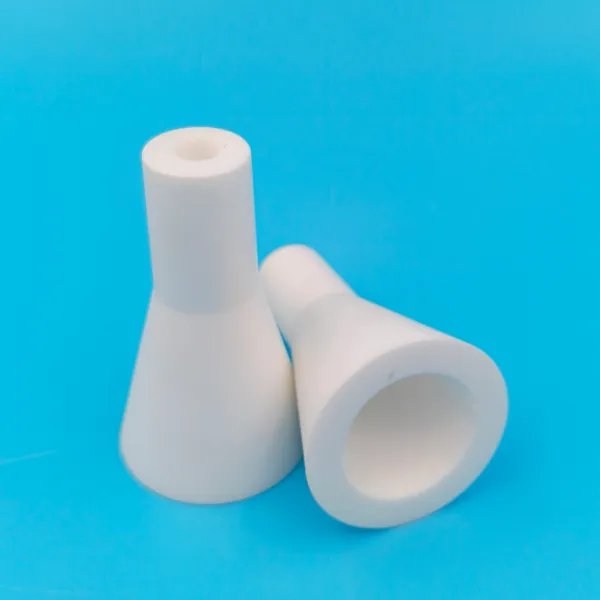
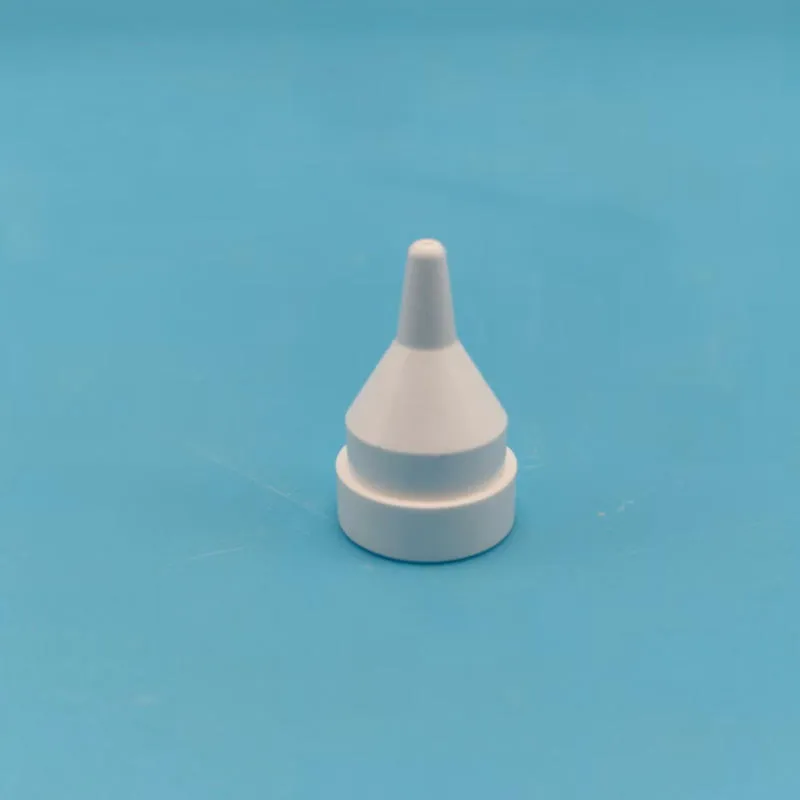
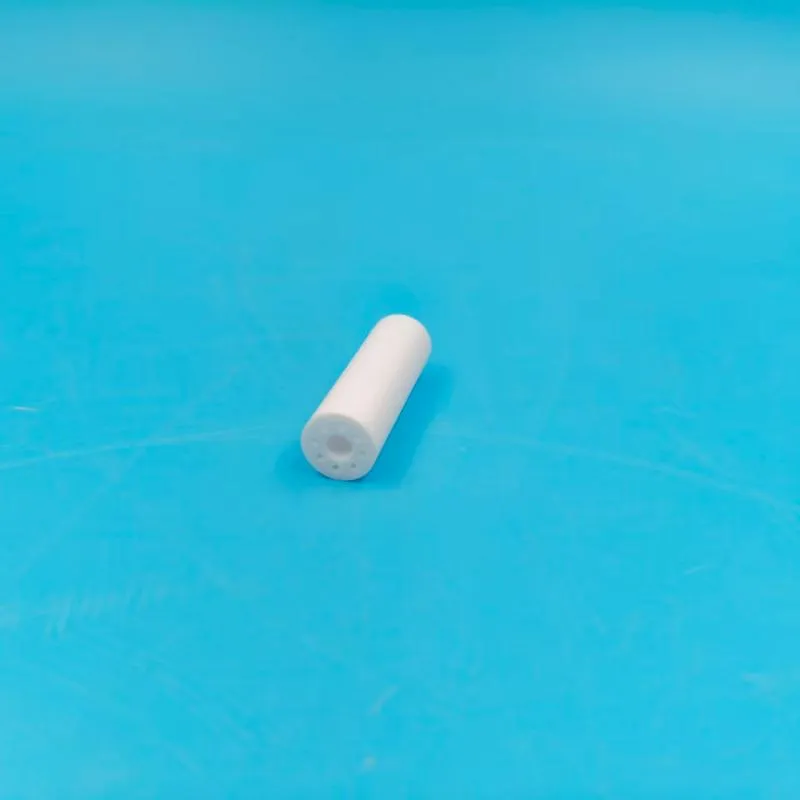
Ceramic Nozzles

Hunan Guoci New Material Technology Co., Ltd.

Alumina Ceramic Parts,Zirconia Ceramic Parts,Ceramic Nozzle
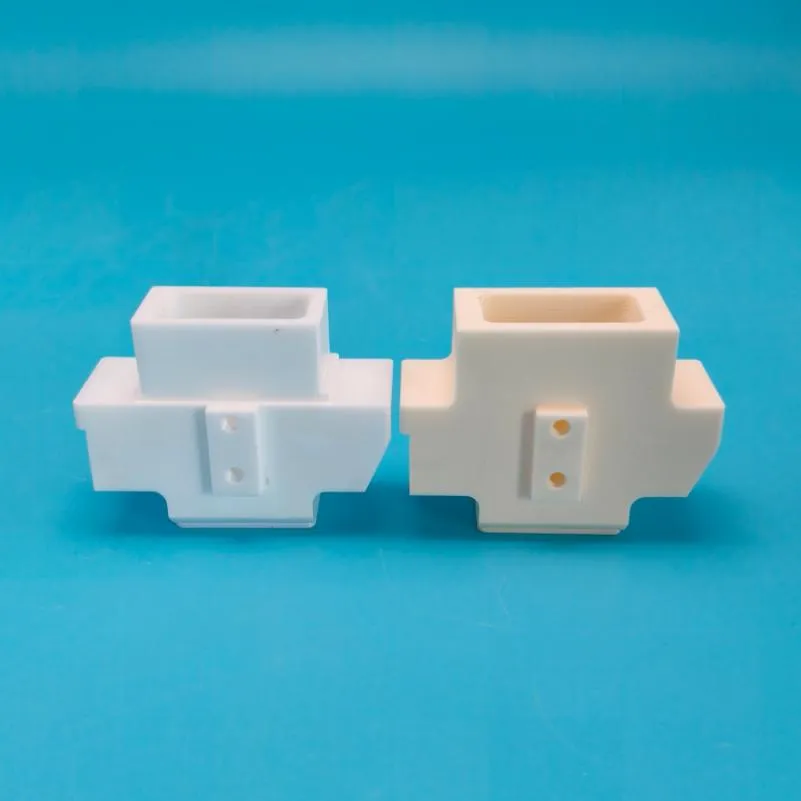
Zirconia and Alumina Ceramic Square Spout for New energy PACK Welding in BSB Welding Machine

Zirconia and Alumina Ceramic Square Spout for New energy PACK Welding in BSB Welding Machine


Material: Alumina(95%-99.8% Al₂O₃), Zirconia(ZrO2)

Sizes:Min-OD: 0.02mm; Max-length: 500mm

Customized: Can be custom for special sizes and shapes

Delivery Times:2 -25 days(depends on the structure and quantity)

Features:High hardness, Wear resistance, High temperature insulation, High dielectric strength, HHigh mechanical strength.

  1. Fracture Toughness (MPa·m¹/²): 3.8-12
  2. Refractoriness: 1000-1750℃
  3. Density: 3.7-6.0g/cm3
  4. Flexural Strength (MPa): 300-1200
  5. Thermal Conductivity: 2.5-30W/M.K
Transport Package: Cartons, Wooden Box

Shipment: by sea by air by courier by post etc.

    Welcome to leave us a message

  • Close

Product Description

The use of zirconia or alumina ceramic square nozzles (spouts) on BSB welding machines primarily addresses the wear, adhesion, or contamination problems encountered with traditional metal nozzles in specific welding processes (such as ultrasonic welding or active brazing).

These two materials, with their excellent physical and chemical properties, significantly improve the stability of the welding process and the lifespan of the nozzles. Their wear resistance, corrosion resistance, high-temperature resistance, and insulation properties are mainly utilized to solve problems such as short lifespan and reduced process accuracy of metal nozzles under harsh operating conditions.

Why are ceramic nozzles needed in BSB welding?

BSB welding typically refers to ultrasonic metal welding or similar solid-state joining processes. Its core principle is to achieve a connection by using high-frequency vibration and pressure to induce plastic flow at the material interface. During this process, the nozzle (or welding head, tool head) needs to be in direct contact with the materials being welded and apply high-frequency energy.

1. Solving adhesion and friction: When welding ductile metals such as aluminum and copper, the metal material is prone to "cold welding" or adhesion to the metal tool head, leading to uneven energy transfer and affecting weld quality. Ceramic materials, due to their low coefficient of friction and chemical inertness, effectively prevent adhesion between the welding material and the nozzle.

2. Eliminating magnetic contamination: For welding high-precision electronic components, magnetic impurities must be eliminated. The "non-magnetic" nature of ceramic materials completely avoids ferromagnetic particle contamination that may occur after the metal nozzle wears down.

3. Withstanding extreme conditions: In some high-temperature brazing processes (such as Cerasolzer active soldering), the nozzle may require auxiliary heating or withstand localized high temperatures. Zirconia and alumina ceramics both have excellent high temperature resistance and thermal shock resistance.

Performance Advantages: Alumina vs. Zirconia

Although both are high-performance ceramics, their advantages differ in specific applications on BSB welding machines.

Alumina (Al₂O₃) Nozzles: Cost-Effective Choice


Alumina ceramics are one of the most widely used ceramic materials in industry, with advantages in high hardness and economy.


Performance Dimensions Features and Advantages Value for BSB Welding
Ultra-high Hardness Vickers hardness can reach 1500-1600 HV, far exceeding that of metals. Resisting repeated friction during welding, maintaining the flatness of the nozzle end face, and ensuring long-term weld consistency.
High wear resistance Excellent resistance to abrasive wear. Suitable for materials where the welding surface may contain slight oxides or hard particles; nozzle wear is minimal.
Corrosion and heat resistance Chemically stable, resistant to high temperatures, and does not react with most chemicals. The nozzle remains stable and is not easily corroded in high-temperature welding or flux-containing environments.
Economical Raw material costs are relatively low, and manufacturing is mature. For standard welding tasks and scenarios where toughness requirements are not particularly high, it is a highly cost-effective choice.


Zirconia (ZrO₂) Nozzles: High-Performance Representative


The core advantages of zirconia ceramics are high toughness and impact resistance. It overcomes the common weakness of ceramics being brittle through a special mechanism called "phase transformation toughening."


Performance Dimensions Features and Advantages Value for BSB Welding
High Fracture Toughness Fracture toughness reaches 9 MPa·m¹/², 2-3 times that of alumina. This is the core advantage. Under ultrasonic vibration or mechanical impact, zirconia nozzles are less prone to chipping and cracking, greatly extending their service life.
Impact Wear Resistance Lower wear under vibration and impact loads. Ideal for high-frequency vibration conditions like BSB welding. The material's high toughness effectively absorbs vibration energy, preventing brittle fracture.
High Bending Strength Bending strength reaches over 800 MPa, higher than alumina. This allows for more precise nozzle designs, thinner walls, and less damage, facilitating complex nozzle shapes (such as square).
Good Self-Lubrication Low and stable surface friction coefficient. Under pressure, it has a lower tendency to adhere to the weld metal, resulting in a crisper weld release and improved weld appearance.
Thermal Expansion Matching The coefficient of thermal expansion is close to that of steel. This matching reduces stress damage caused by differences in thermal expansion and contraction if the nozzle needs to be assembled with metal parts.


A table to help you choose the right one


Comparison Dimensions Alumina (Al₂O₃) Zirconia (ZrO₂)
Hardness (HV) High (1500-1600) High (approx. 1200)
Fracture Toughness Average (3-4 MPa·m¹/²) Very High (9 MPa·m¹/²)
Impact/Chipping Resistance Average (brittle) Excellent (phase transformation toughening)
Flexural Strength Good (245-560 MPa) Excellent (Up to 800 MPa)
High Temperature Resistance Excellent (over 1000°C) Excellent (strength decreases at >800°C)
Main Failure Modes Brittle cracking, chipping Slow Surface Wear
Cost Low High
Recommended BSB Welding Scenarios Standard Welding, Cost Sensitive, Non-Impact Conditions High Frequency Vibration, High Impact, Long Life, High Precision


Selection Recommendations


When choosing ceramic square nozzles for BSB welding machines, zirconia is generally the more ideal choice, especially for automated production scenarios requiring high precision, long lifespan, and equipment stability.

  • Preferred Zirconia (ZrO₂) Nozzles: When BSB welding machines operate at high frequencies, with high vibration energy, or require long-term continuous operation (such as batch production lines). Their excellent impact and fatigue resistance significantly reduce downtime and replacements due to nozzle breakage. Although the unit cost is higher, the overall cost of use is lower.
  • Alumina (Al₂O₃) Nozzles: Used for applications with lower welding strength and milder welding parameters, or as a low-cost option for early process verification and pilot production. Alumina also excels if the welding material itself requires extremely high hardness.


Furthermore, regardless of the material chosen, it is recommended to prioritize products manufactured through precision forming and high-temperature sintering processes. Higher density (closer to theoretical density) results in better wear resistance and service life.