Hunan Guoci New Material Technology Co., Ltd.


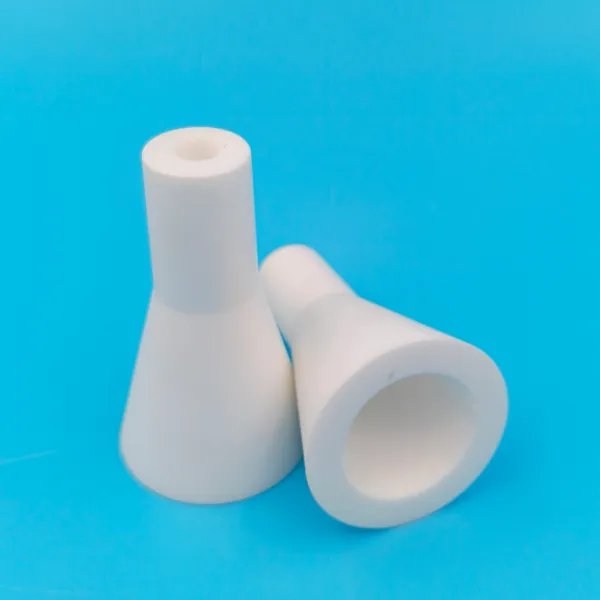
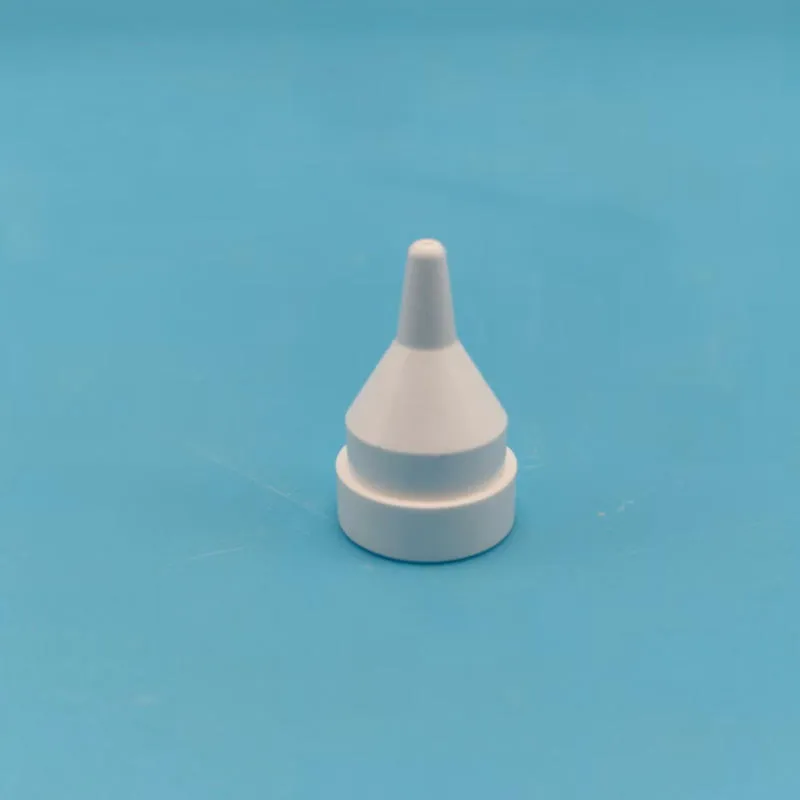
The alumina ceramic nozzle is one of the most critical consumables in a plasma cutting torch. Made of high-purity alumina ceramic (Al₂O₃ ≥ 95%), it is a core component ensuring stable equipment operation, precise cutting, and operational safety. It acts as a combination of the cutting torch's "heart valve" and "protective armor," primarily used to control arc stability and gas ejection.
Core Functions: Electrical Insulation and Arc Stabilization
This is the most fundamental function of the alumina ceramic nozzle. Plasma cutting relies on a high-temperature arc, while the metal body of the cutting torch is conductive.
Key Function: Alumina ceramics possess extremely high electrical insulation properties. Installed between the nozzle and the metal parts of the cutting torch, it plays a crucial isolating role, ensuring that current flows only along the designed path to the electrode and nozzle, thus forming a stable and concentrated electric arc. Without this insulating element, the electric arc will erratically propagate, leading to skewed cuts and even equipment malfunction.
Physical Protection: High Temperature Resistance and Thermal Shock Resistance
During plasma cutting, the nozzle orifice must withstand high temperatures and the intense impact of molten slag.
Key Function: Alumina ceramics (especially high-purity ones, such as Al₂O₃≥95%) possess excellent high temperature resistance, high hardness, and wear resistance. It can directly withstand the scouring of high-temperature molten slag and the impact of spatter, protecting internal precision components from damage.
The Ingenious Use of the "Protective Cover": In practical use, an alumina ceramic protective cover (also called a large ceramic sleeve) is usually installed outside the alumina ceramic nozzle. This protective cover can:
Impact Buffering: Effectively absorb the impact of flying metal chips or accidental collisions with the workpiece during cutting, protecting the main nozzle from direct impact and breakage.
Stable Airflow: Guides compressed air to flow evenly, avoiding airflow turbulence, thus ensuring a stable arc and improving cutting quality.


 +86 181 0845 7259
 marketing@guociceramic.com
 English
 Español
 Deutsch
 اللغة العربية
 Русский язык