Advanced ceramics play a pivotal role in the high-temperature operation of Solid Oxide Fuel Cells (SOFCs). SOFCs typically operate at temperatures ranging from 600°C to 1,000°C. This demanding thermal environment imposes rigorous requirements on materials: they must possess sufficient ionic conductivity while maintaining long-term chemical and structural stability.
Thanks to their high-temperature resistance, corrosion resistance, and customizable electrochemical properties,
advanced ceramic materials have become the preferred choice for critical SOFC components.
From on-site power supply for data centers to distributed energy systems for industrial and commercial use, the applications of Solid Oxide Fuel Cells (SOFCs) are expanding into diverse scenarios. As the industry advances toward large-scale deployment, critical components within the fuel cell stack—as well as those involved in manufacturing and testing—face increasingly stringent reliability requirements. Ceramic fixtures are one such example.
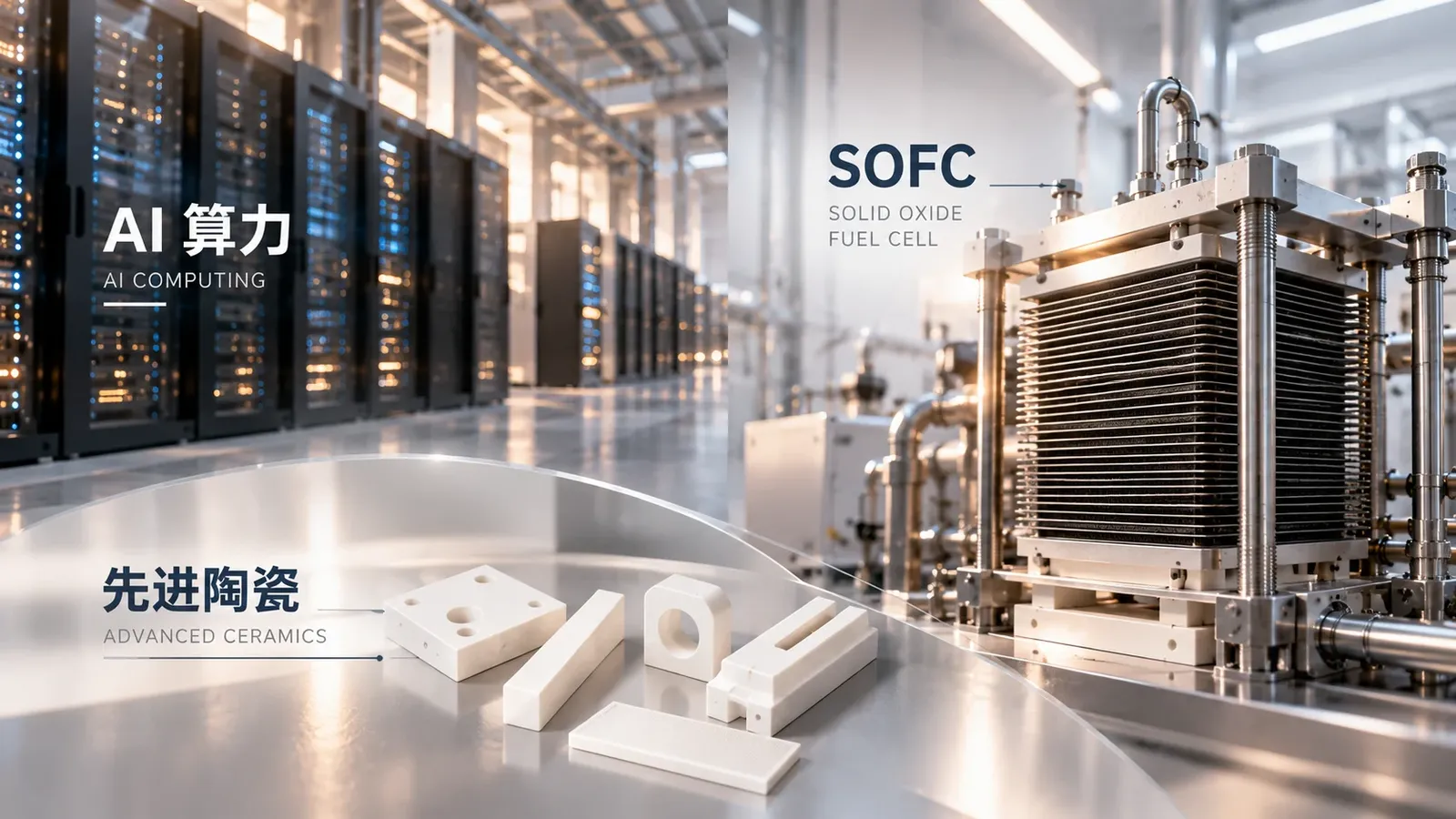
Ceramic structural components for Solid Oxide Fuel Cell (SOFC) applications.
I. Beyond AI Computing Power: A Parallel "Power Competition"
The rapid expansion of AI computing power is driving up electricity demand in data centers. In regions where the timeline for grid expansion and connection lags behind the pace of data center construction, distributed power generation solutions—deployable directly at the project site—are garnering greater attention. SOFC technology represents a prime example of this approach. By converting the chemical energy in fuel directly into electrical energy through high-temperature electrochemical reactions, SOFCs offer high efficiency, modularity, and fuel flexibility, making them suitable for applications such as data centers and industrial/commercial distributed power generation. Driven by growing downstream demand, SOFCs are transitioning from the R&D and validation phase toward large-scale manufacturing. Industry focus has shifted from merely achieving efficient power generation to ensuring the long-term, stable operation of stacks and their components in high-temperature environments. Consequently, the importance of structural components—such as ceramic substrates, electrodes, interconnects, sealing parts, and ceramic fixtures—has become increasingly apparent.
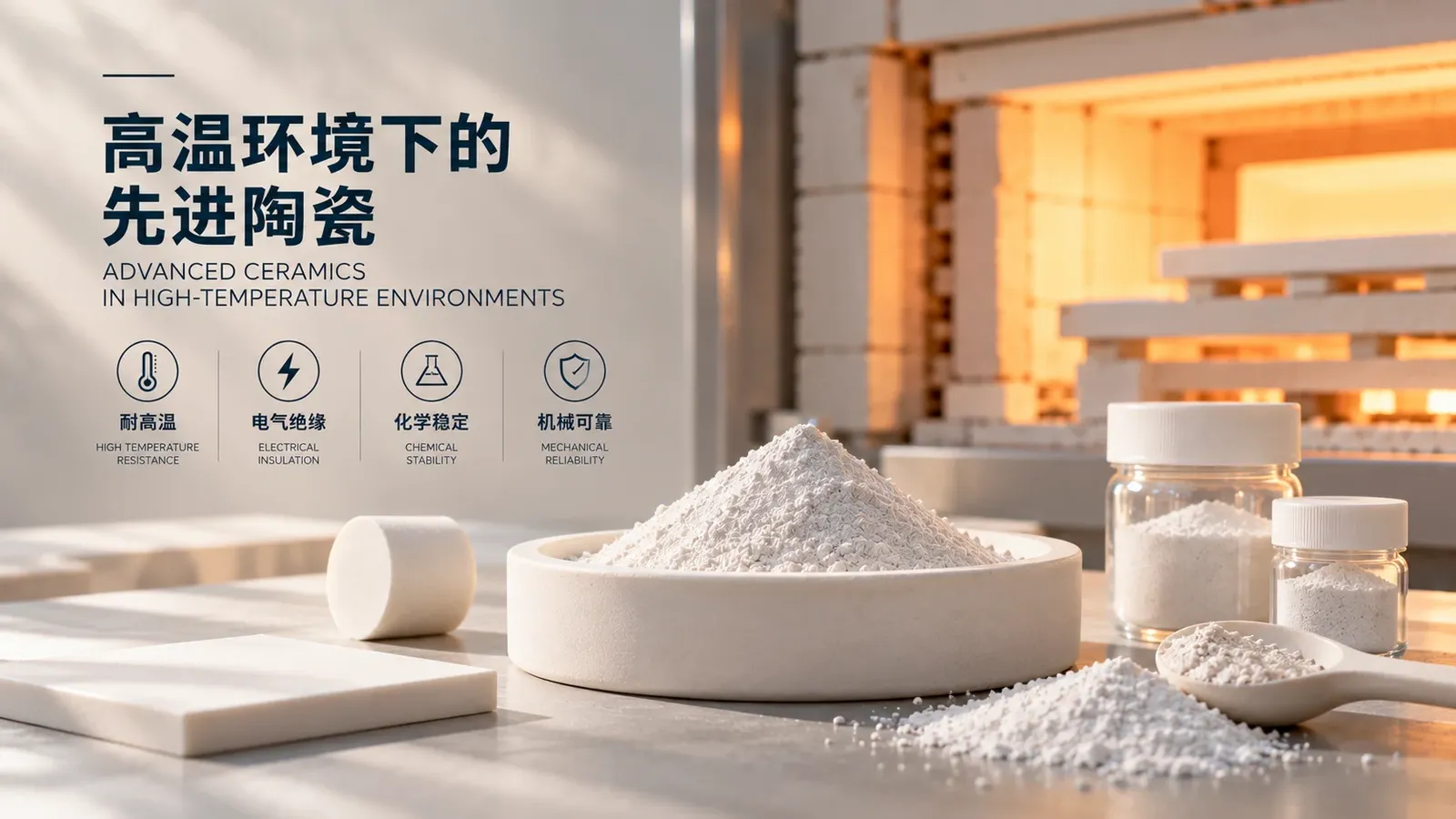
Advanced ceramics in high-temperature environments: high-temperature resistance, electrical insulation, chemical stability, and mechanical reliability.
II. Why Choose Advanced Ceramics for High-Temperature Operation (Hundreds of Degrees Celsius)?
SOFCs operate at high temperatures—often hundreds of degrees Celsius—and within complex atmospheric environments, placing unique demands on fixtures and related structural components. Traditional metal materials used under long-term high-temperature conditions and in oxidizing or reducing atmospheres may face issues such as oxidation, instability, and impurity contamination; additionally, electrical isolation requirements must be considered for components requiring electrical insulation.
In contrast, advanced ceramics offer a combination of high-temperature resistance, electrical insulation, and excellent chemical stability. They maintain stable performance in high-temperature environments while minimizing the risks of oxidation and impurity contamination that could interfere with battery manufacturing and testing. This highlights the critical value of ceramic fixtures in SOFC applications: they address not only the challenge of securing components at high temperatures but also the need for electrical insulation, stability, and cleanliness.
Among these materials, alumina is a common choice for SOFC ceramic fixtures and structural components due to its excellent high-temperature resistance, electrical insulation properties, high hardness, and chemical stability. For structural locations demanding greater mechanical strength, toughness, and crack resistance, composite ceramics—such as Zirconia-Toughened Alumina (ZTA)—may be employed based on specific requirements.
Consequently, the ceramic materials required vary depending on the specific structural location; selection must be based on a comprehensive assessment of operating temperatures, loading conditions, structural geometry, and assembly requirements.
III. What exactly do the ceramic fixtures inside an SOFC stack do?
SOFC ceramic fixtures are primarily used during battery manufacturing, performance testing, and stack assembly, serving functions such as securing, supporting, applying pressure, providing electrical insulation, and facilitating sealing. Their applications can be broadly categorized into two types based on the stage of use:
1. Manufacturing Process: Securing and Supporting During High-Temperature Firing
SOFC cells undergo high-temperature firing during manufacturing. Temperature fluctuations and material shrinkage can cause the cells to warp, deform, or even adhere to adjacent components. High-temperature ceramic fixtures serve to secure, support, and isolate the cells during this process, helping them maintain their required shape and position. For fixtures exposed directly to high-temperature processing environments, ceramic materials like high-purity alumina also minimize impurity introduction, thereby reducing the risk of interfering with the battery materials.
2. Testing and Stack Assembly: Stable Compression and Sealing Integration
Upon entering the single-cell testing or stack assembly phase, ceramic fixtures must position the cell and its associated components while applying and maintaining appropriate compressive force to ensure stable component integration. Simultaneously, the fixtures must work in tandem with sealing structures to maintain the airtight environment required for testing and operation; some test fixtures also integrate gas flow channels and interfaces for monitoring current, voltage, and temperature to meet the system's functional requirements.
In operating environments reaching hundreds of degrees Celsius, the fixtures themselves must withstand the stresses caused by temperature fluctuations. An all-ceramic structure minimizes issues such as high-temperature oxidation of metals and impurity contamination. Furthermore, by accounting for thermal expansion compatibility between components and incorporating pressure compensation mechanisms, a relatively stable compressive state is maintained even as temperatures rise.
Thus, all-ceramic construction, thermal expansion matching, pressure compensation, functional integration, and precision sealing constitute the key features that enable SOFC ceramic fixtures to perform in high-temperature environments. From fixation and support during manufacturing to compression, insulation, and sealing during testing and assembly, the core challenge addressed by ceramic fixtures is maintaining the cell's position, structural loading, and operating environment stability amidst high temperatures and complex atmospheres.
These requirements ultimately translate into stringent demands regarding ceramic material properties, machining precision, and assembly tolerances, posing significant challenges for the manufacturing of advanced ceramic components.
IV. From Material to Validation: Advanced Ceramics as True "Engineering Components"
For high-temperature precision structural components like SOFC ceramic fixtures, the true challenge lies in translating material properties into structures that are manufacturable, assemblable, and verifiable.
Every stage—from material systems, forming, and sintering to the precision machining of holes, slots, steps, and complex profiles—influences final dimensions and assembly outcomes. Machining complex structures and ensuring batch-to-batch consistency present particularly high demands on manufacturing processes, especially given the high hardness and brittleness of advanced ceramics.
As SOFC technology moves toward large-scale application, requirements regarding materials, structural design, and manufacturing consistency will become increasingly rigorous. When requirements such as high temperatures, complex atmospheres, and precision assembly converge, advanced ceramics offer more than just material properties; they provide an engineering capability that ensures the stable operation of systems.
Targeting applications in SOFCs and other new energy equipment, Hunan Guoci will continue to build its expertise in advanced ceramic materials, precision manufacturing, and testing and validation, thereby driving the adoption of advanced ceramics in scenarios involving high temperatures, electrical insulation, and complex structural designs.


 +86 181 0845 7259
 marketing@guociceramic.com
 English
 Español
 Deutsch
 اللغة العربية
 Русский язык