Ceramic Plates

Hunan Guoci New Material Technology Co., Ltd.

Ceramic Block,Alumina Ceramic Parts
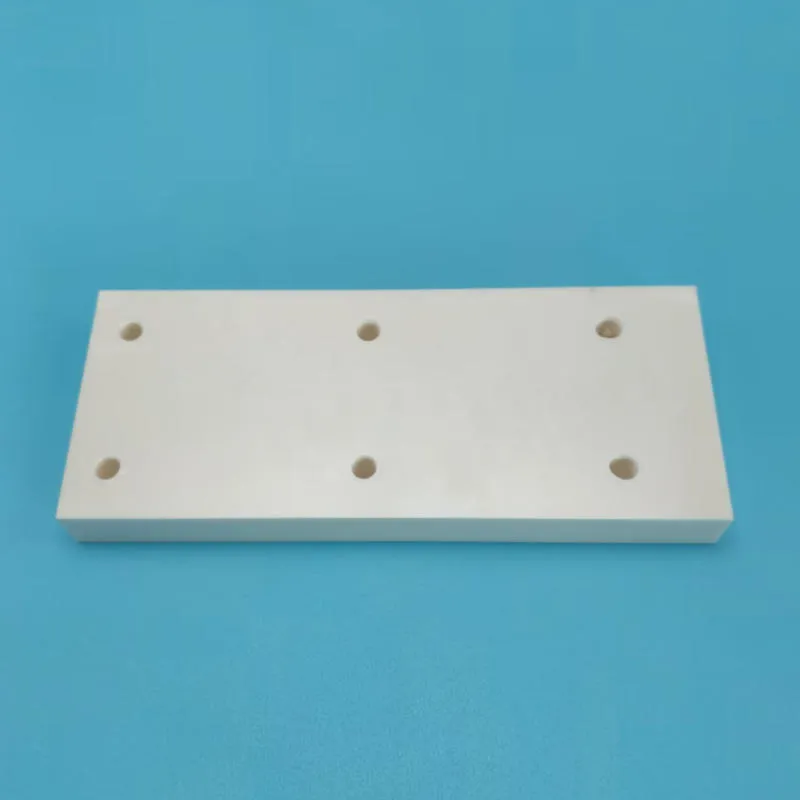
95%-99.8% Alumina Ceramic Mounting Block with Countersunk Through Holes
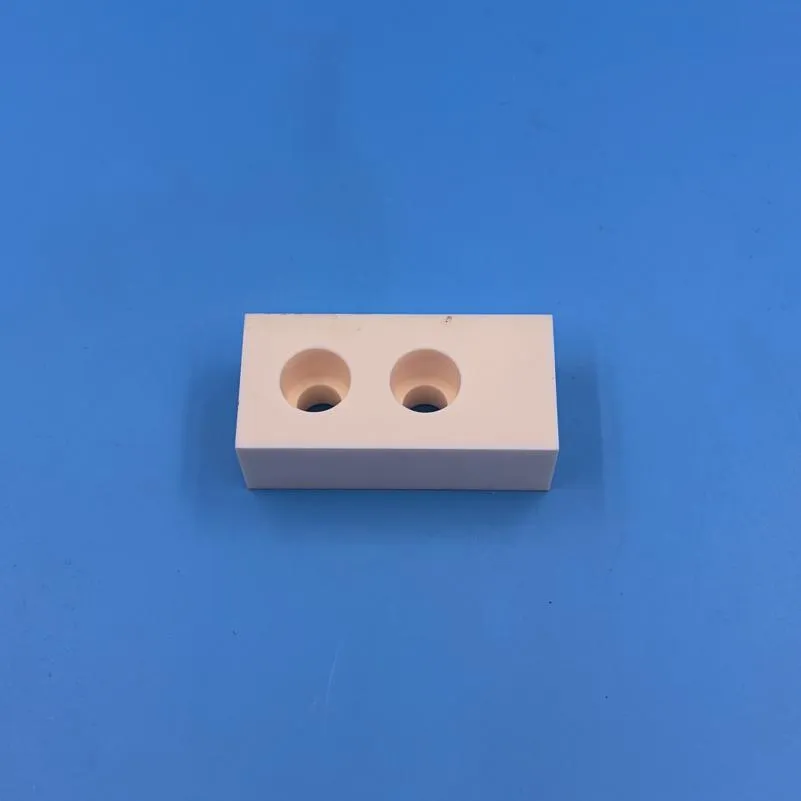
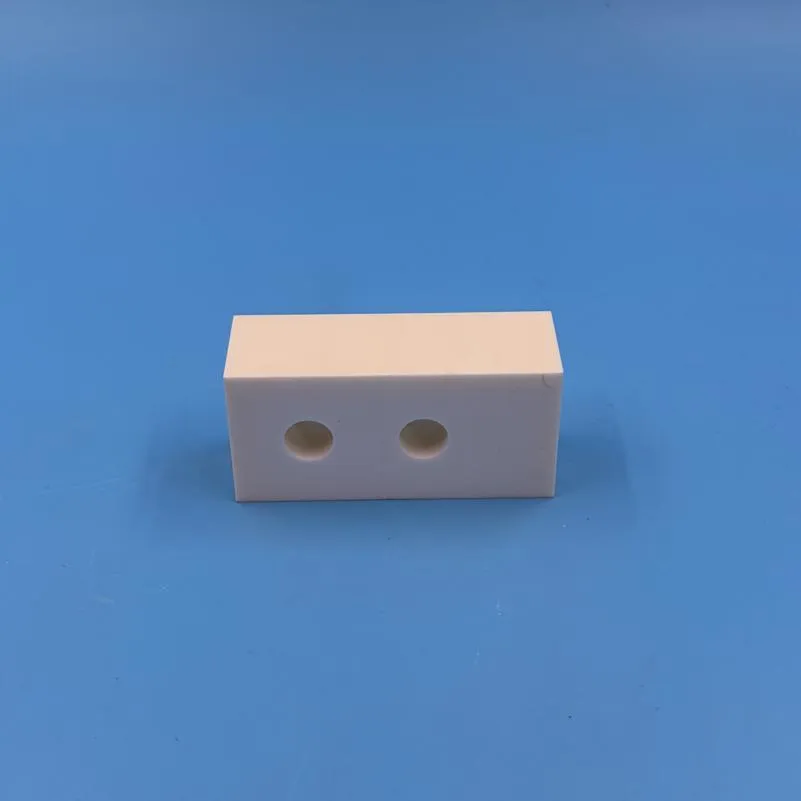
Alumina ceramic mounting block with two countersunk through holes

95%-99.8% Alumina Ceramic Mounting Block with Countersunk Through Holes


Material: Aluminum Oxide, Alumina, 95%-99.9% Al₂O₃

Sizes:Min-OD: 0.02mm; Max-length: 500mm

Customized: Can be custom for special sizes and shapes

Delivery Times:2 -25 days(depends on the structure and quantity)

Features:High hardness, High temperature resistance, Wear resistance, Corrosion resistance, High insulation

  1. Fracture Toughness (MPa·m¹/²): 3.8-4.4
  2. Refractoriness: 1500-1750℃
  3. Density: 3.7-3.95g/cm3
  4. Flexural Strength (MPa): 300-375
  5. Thermal Conductivity: 25-30W/M.K
Transport Package: Cartons, Wooden Box

Shipment: by sea by air by courier by post etc.

    Welcome to leave us a message

  • Close

Product Description

This is a rectangular alumina ceramic block featuring two countersunk through-holes on the top surface. The material is dense, and the component is a typical alumina structural part produced via machining or post-forming grinding. The two countersunk holes are generally used for securing with countersunk screws, or for positioning, routing wires or tubing, and accommodating electrodes or thermocouples.

Structural Features of the Component

Structure Potential Function
Rectangular base block Provides mounting surfaces, support, and positioning
Two through-holes For routing wires, gases, fluids, electrodes, or thermocouple
Counterbores Allow for recessed screw heads to prevent protrusion/interference; can also serve as load-bearing positioning points
Monolithic ceramic material Provides electrical insulation, high-temperature resistance, corrosion resistance, and wear resistance

Material Advantages (Primarily 95%/99% Alumina)

  • Excellent electrical insulation: High resistivity, suitable for high-voltage applications and the isolation of heating elements.
  • High-temperature resistance: Remains stable over long periods in oxidizing atmospheres; does not oxidize or soften.
  • Corrosion resistance: More stable than metals when exposed to most acids, bases, and corrosive gases.
  • High hardness and wear resistance: Suitable for environments involving friction or exposure to abrasive powders.
  • Good dimensional stability: Resists deformation at high temperatures, making it ideal for precision positioning.

Key Application Areas

1. Heating Equipment and Industrial Furnaces

Used as insulating mounts for heating wires or strips, or as supports and spacers for thermocouples within furnaces, preventing short circuits and oxidation caused by metal-to-metal contact.


2. Electronic and Electrical Insulation

Used for terminal blocks, electrode supports, high-voltage isolation blocks, and internal fixtures for power supply units, leveraging the material's insulating and heat-resistant properties.


3. Sensors and Temperature-Measurement Equipment

The two holes can accommodate thermocouples or electrical leads; the component serves as a mounting base or probe fixture for temperature sensors, providing electrical insulation and media isolation.


4. Semiconductor and Vacuum Equipment

When made from high-purity alumina, these components serve as insulating supports, positioning blocks, or corrosion-resistant fixtures within vacuum chambers—critical for minimizing metal impurities and preventing contamination. 


5. Chemical Processing and Electroplating Equipment

Used for supports, mounting blocks, flow-guiding components, and pump/valve accessories in corrosive environments; offers superior resistance to acids, alkalis, and corrosive media compared to metals.


6. Wear-Resistant and Guiding Mechanical Components

Suitable for use as wear-resistant pads, guide blocks, pressure blocks, or liners for powder-handling equipment; helps reduce metal-on-metal wear and metallic contamination.


7. New Energy and Battery Testing

Used for insulating blocks in battery testing fixtures, support blocks for high-temperature tooling, and isolation components in electrolyte-exposed environments (specific chemical compatibility and temperature limits must be verified).
8. Laboratory and Instrumentation
Used as sample support blocks, spacers for heating platforms, or insulating components for fixtures; easy to clean and capable of withstanding elevated temperatures.