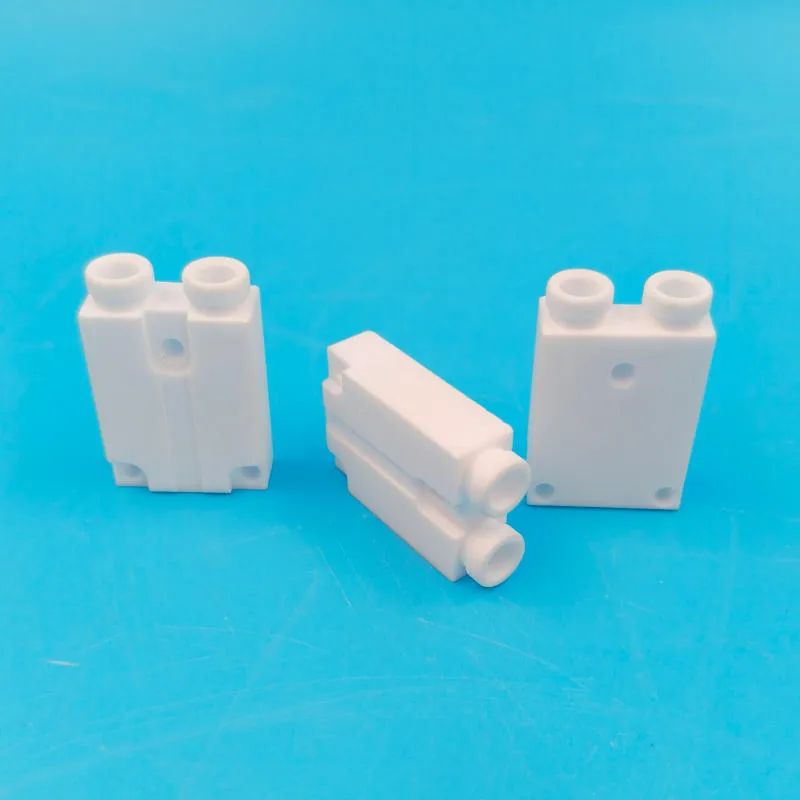
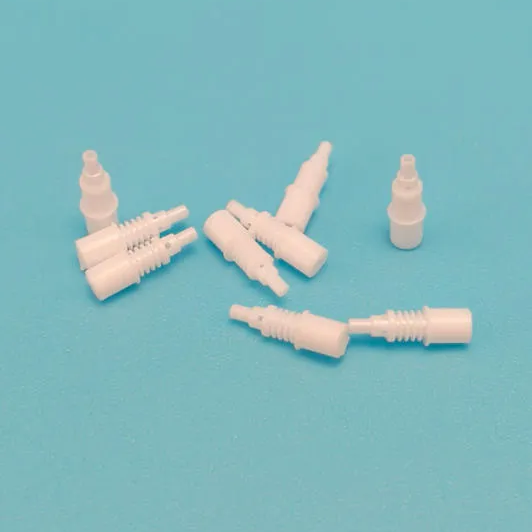
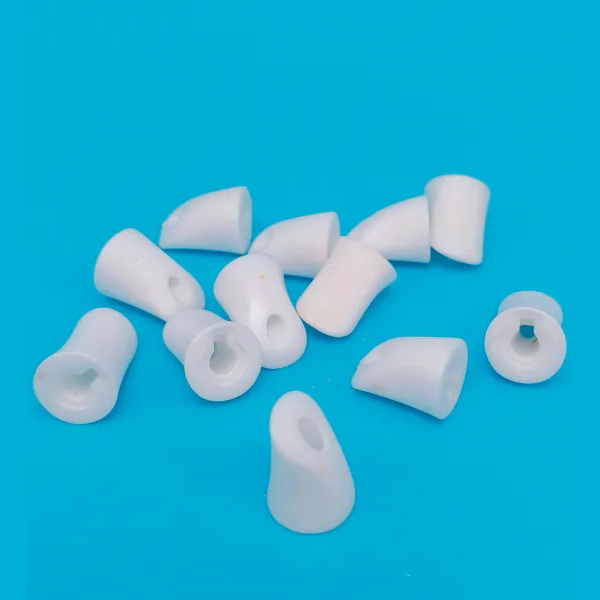
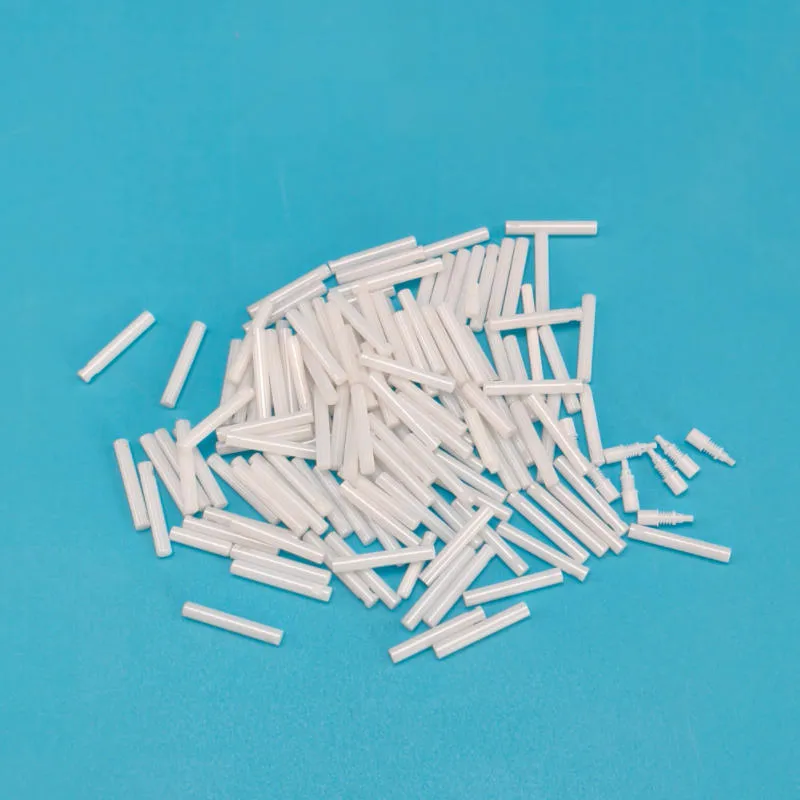
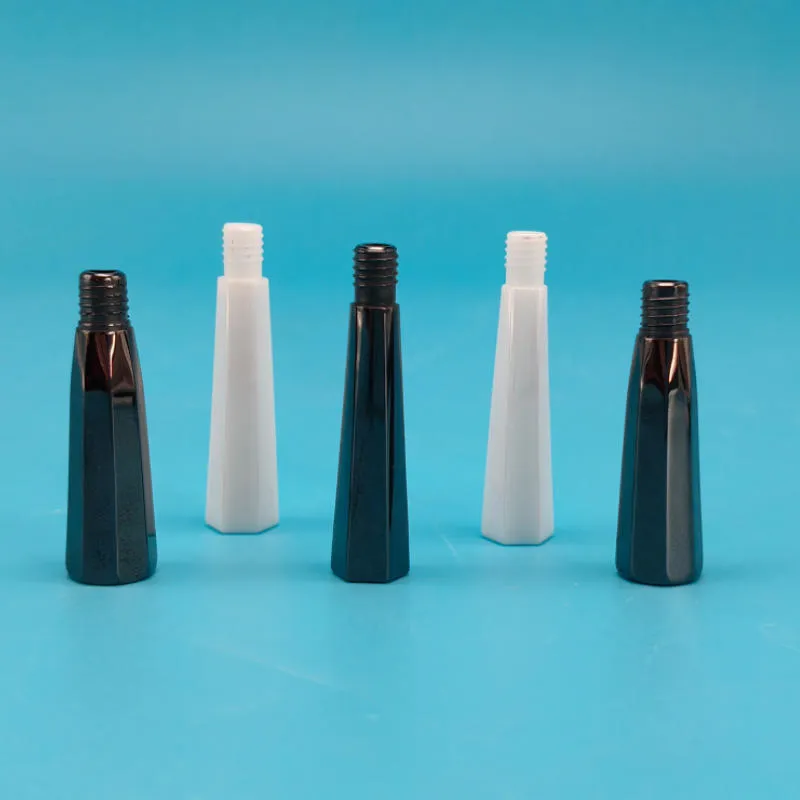
Injection molding ceramic parts

Hunan Guoci New Material Technology Co., Ltd.

Alumina Ceramic Parts
5% Alumina Ceramic Housing for Automotive Radiators

95% Alumina Ceramic Housing Custom Ceramic Parts for Automotive Radiators


Material: Aluminum Oxide, Alumina, 95%-99.9% Al₂O₃

Sizes:Min-OD: 0.02mm; Max-length: 500mm

Customized: Can be custom for special sizes and shapes

Delivery Times:2 -25 days(depends on the structure and quantity)

Features:High hardness, High temperature resistance, Wear resistance, Corrosion resistance, High insulation

  1. Fracture Toughness (MPa·m¹/²): 3.8-4.4
  2. Refractoriness: 1500-1750℃
  3. Density: 3.7-3.95g/cm3
  4. Flexural Strength (MPa): 300-375
  5. Thermal Conductivity: 25-30W/M.K
Transport Package: Cartons, Wooden Box

Shipment: by sea by air by courier by post etc.

    Welcome to leave us a message

  • Close

Product Description

The application of alumina ceramics in automotive radiators (cooling systems) is not as the main radiator core, but as a "key functional component" material to improve the efficiency, reliability, and intelligence of the entire thermal management system.

With its unique combination of properties, alumina ceramics are playing an increasingly important role as key components in automotive thermal management systems and water-related systems, especially in new energy vehicles and high-end models.

Applications and Functions

The indirect and direct applications of alumina ceramics in automotive thermal management systems are mainly reflected in the following aspects:

1. Heat dissipation substrate for power electronic devices (IGBT/power module water-cooled plate)
  • Application locations: Core high-voltage components such as motor controllers, on-board chargers, and DC-DC converters in new energy vehicles.
  • Function: IGBT chips in these components generate significant heat. Alumina ceramics (commonly 95% alumina or 99% alumina) are used to fabricate direct copper-clad ceramic substrates due to their high insulation, high thermal conductivity, and thermal expansion coefficient matching the chip. These substrates are then integrated onto liquid cooling channels (water-cooled plates).

2. Sensor Packaging and Protection (Water Temperature, Flow, Pressure Sensors)
  • Application Location: Distributed throughout the thermal management circuits of engine compartments and battery packs, used for precise monitoring of the cooling system status.
  • Function: Alumina ceramics, due to their corrosion resistance, insulation, and high-temperature resistance, are used as the packaging shell or base for these sensors. For example, the sensor probe portion measuring coolant temperature or pressure needs to be in direct contact with the measured liquid. Alumina ceramics can withstand the corrosion and high temperatures (up to 120°C or higher) of coolant (ethylene glycol solution) for extended periods, ensuring the long-term stability and reliability of the sensor.

3. Electric Water Pump Shaft Seals and Wear-Resistant Components
  • Application Location: Electric cooling water pumps.
  • Application: Water pumps need to operate continuously in coolant containing additives. Alumina ceramics possess extremely high hardness, wear resistance, and chemical corrosion resistance. They are commonly used to manufacture mechanical seal rings or bearings for water pumps, paired with polymers or graphite materials in the water to achieve ultra-long lifespan and zero-leakage operation.

4. Heater Core (PTC Water Heater)
  • Application: Cabin and battery heating systems in new energy vehicles.
  • Function: PTC heating elements need to quickly convert electrical energy into heat energy and transfer it to the flowing coolant. Alumina ceramics can serve as an insulating and thermally conductive encapsulation for PTC elements, or as an insulating support and flow channel component inside the heater, ensuring safety and efficiency.