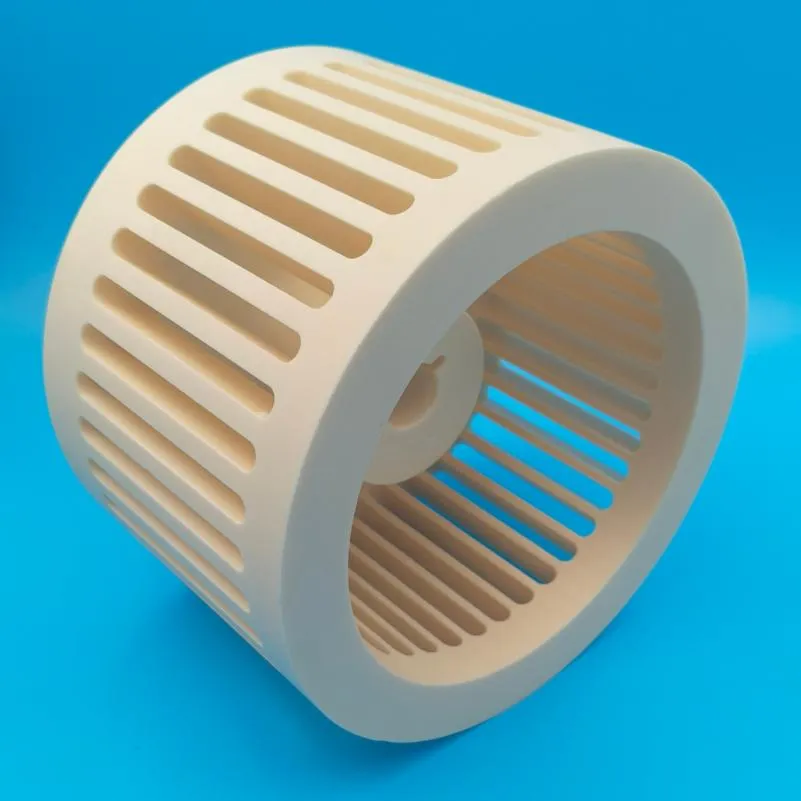
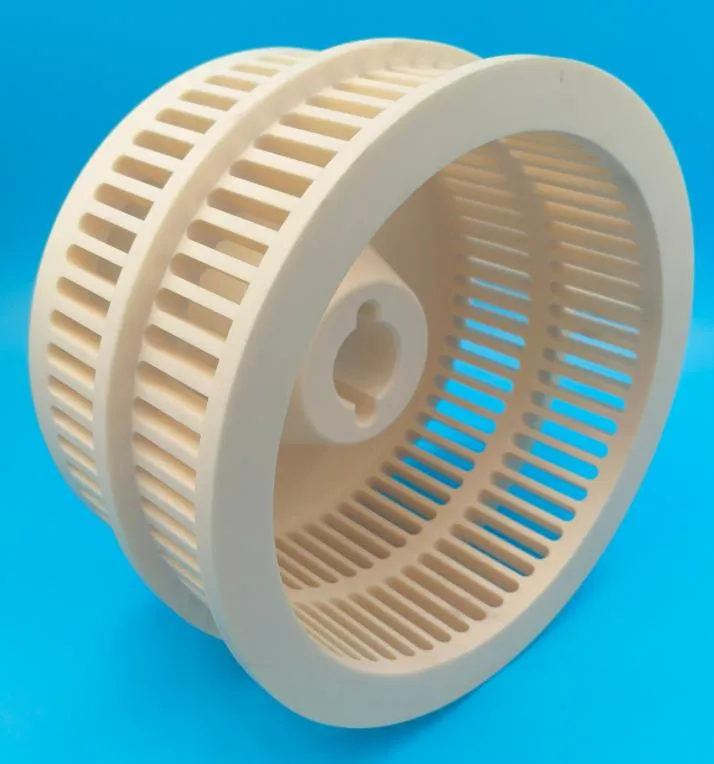
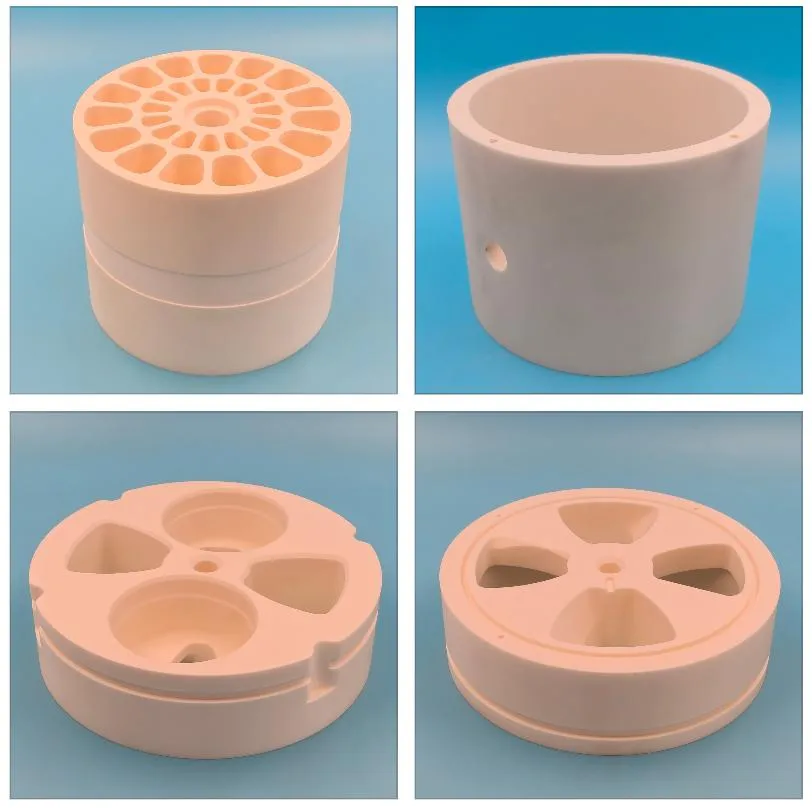
Based on the above properties, alumina ceramic classifying wheels have become standard equipment in many high-end powder processing stages.
1. Lithium-ion Battery Cathode Material Processing in the New Energy Industry
-
In the airflow milling process of lithium iron phosphate and ternary materials (NCM/NCA), the use of 99% alumina ceramic classifying wheels has become industry standard. Specifically designed for the ultra-fine grading of lithium iron phosphate, lithium cobalt oxide, and other battery cathode materials, it is an ideal choice for achieving high-purity, narrow-particle-size finished products.
-
Its metal-free contamination characteristic directly impacts battery energy density and safety, and it has been incorporated into the supply chain standards of major battery manufacturers such as CATL and BYD.
2. Electronic Ceramics and Magnetic Materials
-
Used for the fine classification of electronic ceramic powders such as barium titanate, alumina powder, and ferrite, it can precisely control the fine cutting with D100 ≤ 10μm.
-
Ensuring consistency in dielectric constant and sintering shrinkage rate, it is widely used in the manufacture of high-end components such as MLCCs (multilayer ceramic capacitors), sensors, and inductors.
3. Non-metallic Minerals and Fine Chemicals
-
In the ultrafine grinding of kaolin, talc, and precipitated barium sulfate, ceramic classifying wheels can achieve contamination-free classification, improving product whiteness, dispersibility, and flowability, meeting the needs of high-end coatings, paper fillers, and plastic modification.
4. Pharmaceutical and Food-Grade Powders
-
Suitable for processing scenarios such as ultrafine powders of traditional Chinese medicine, pharmaceutical excipients (such as lactose), and food additives, meeting GMP clean production requirements and ensuring the safety and contamination-free nature of end products.
99% alumina ceramic classifiers are key components in
air jet milling and classification equipment. With their ultra-high hardness, excellent wear resistance and no metal contamination, they have become an indispensable high-performance consumable in the field of high-purity powder processing, such as
lithium batteries and electronic materials.



 +86 181 0845 7259
 marketing@guociceramic.com
 English
 Español
 Deutsch
 اللغة العربية
 Русский язык