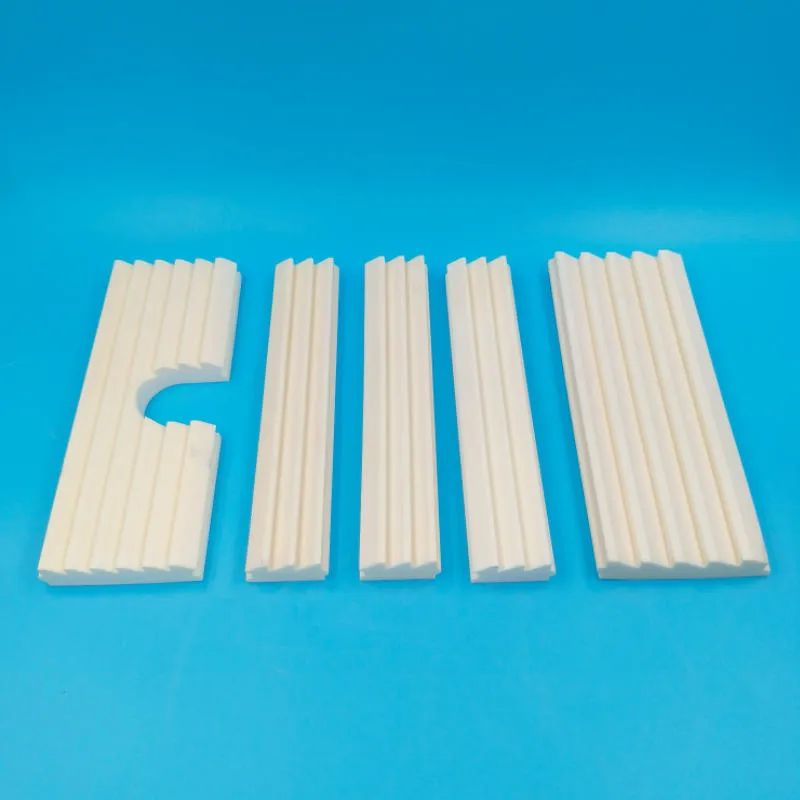
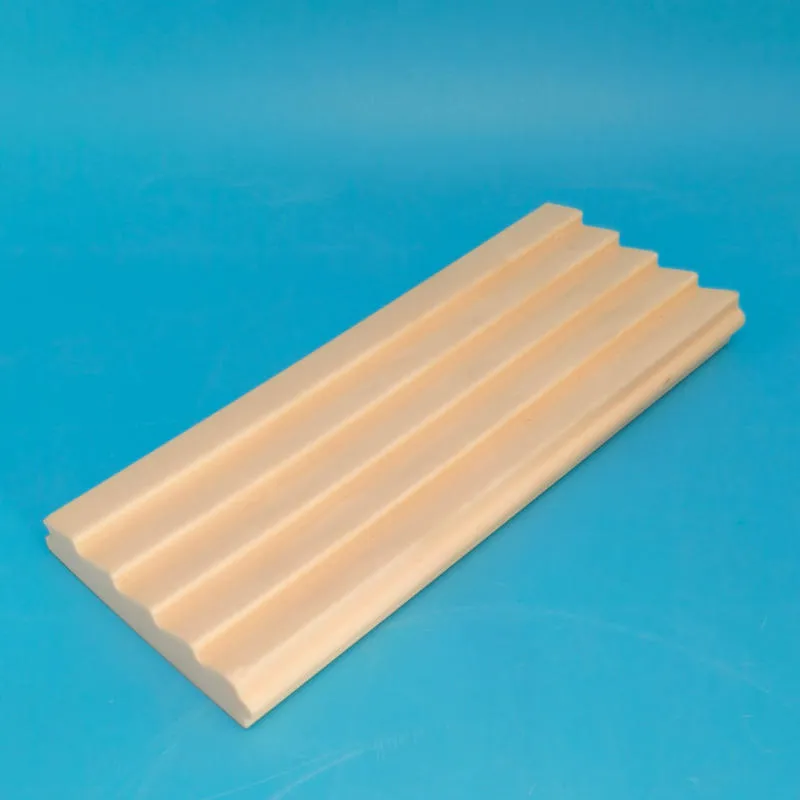
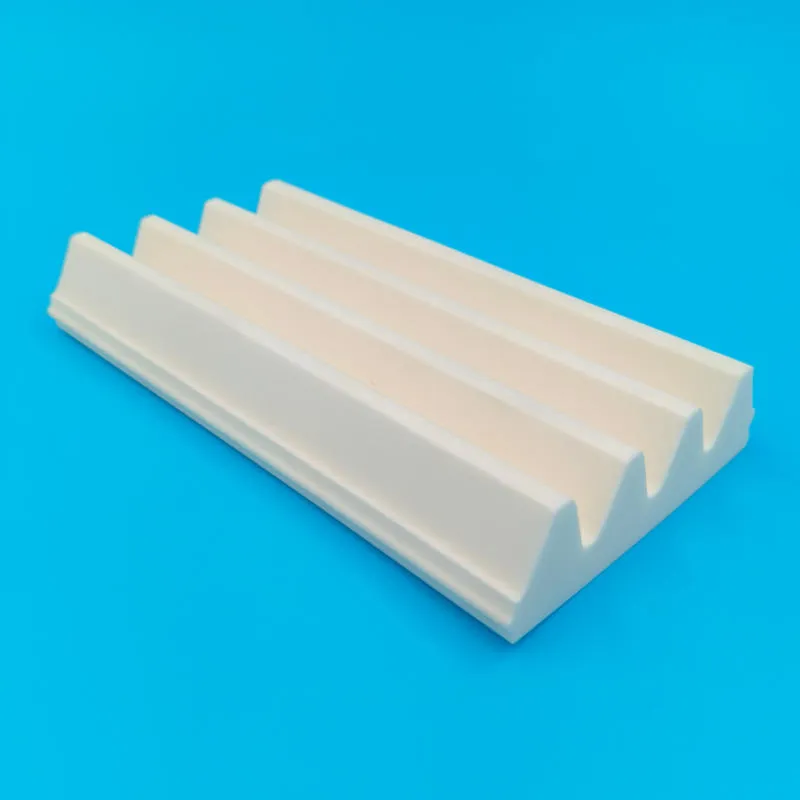
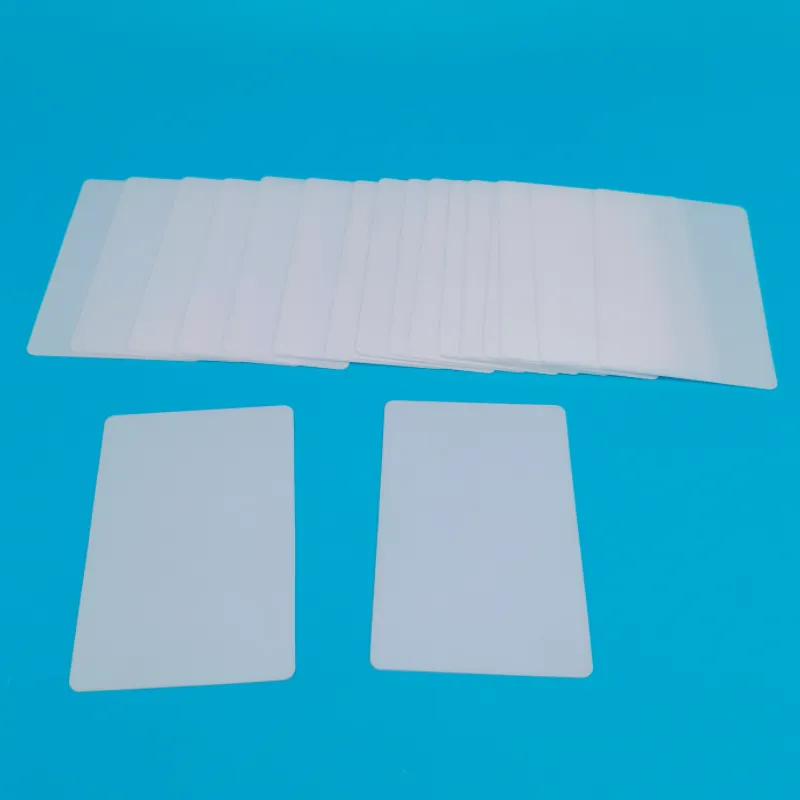
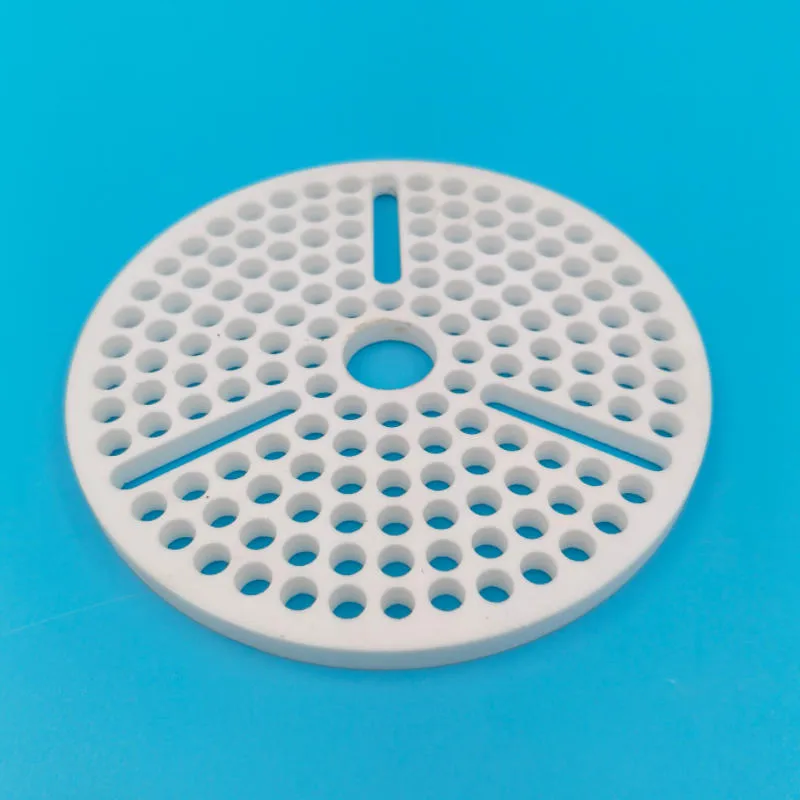
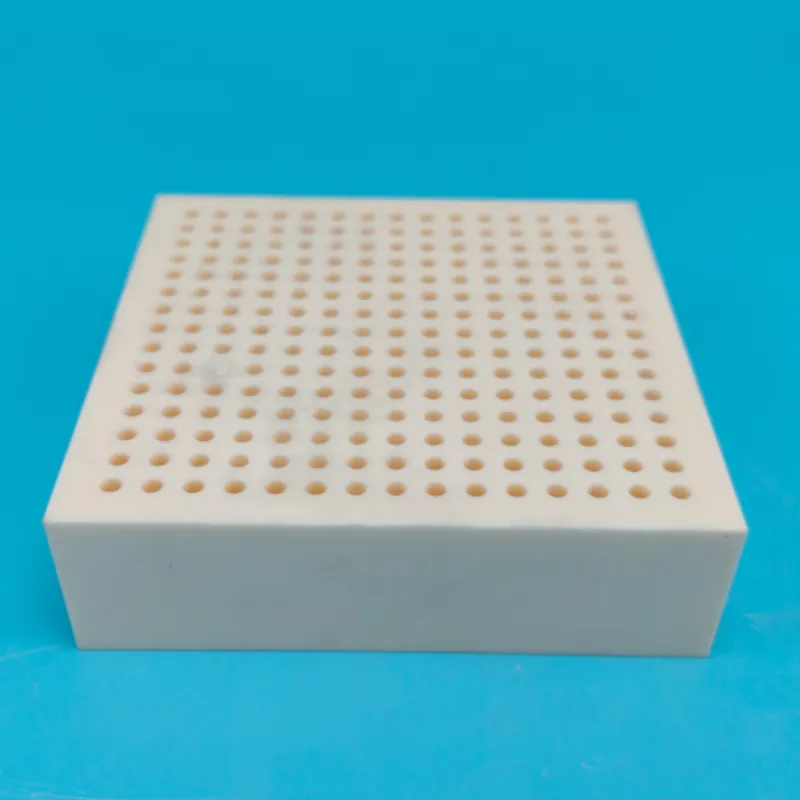
Serrated alumina ceramic plates are typically made from high-purity alumina (such as
95% alumina or
higher purity). Their serrated design aims to increase surface friction, improve positioning, or achieve specific mechanical functions, while inheriting the inherent advantages of alumina ceramics: excellent wear resistance and mechanical strength, superior high-temperature resistance and thermal stability, strong corrosion resistance and chemical inertness, good insulation properties, dimensional stability, and low contamination.
Compared to traditional stainless steel or engineering plastic components, alumina ceramic plates with integrated serrated structures offer irreplaceable advantages under the harsh operating conditions of lithium batteries:
1. Eliminatesmetal contamination and improves battery safety
-
Insulation properties: Alumina ceramics are excellent insulators, completely eliminating the risk of leakage or micro-short circuits that may occur with metal components under high-voltage environments.
-
Zero metal deposition: Lithium battery electrolytes (containing LiPF6, etc.) are highly corrosive. Long-term contact with metal components can easily lead to the deposition of iron and copper ions, causing battery self-discharge or even thermal runaway. Alumina ceramics are chemically extremely stable and do not react with the electrolyte, ensuring the purity and long lifespan of the battery cell from the source.
2. Extreme wear resistance, reduced maintenance costs
-
Double lifespan: In high-wear processes such as mixing and slitting, metal tools or guides often need frequent replacement (e.g., every 72 hours), while alumina ceramic components can have a lifespan exceeding 2000 hours, reducing maintenance costs by more than 80%.
-
Dimensional stability: Theserratedstructure requires extremely high dimensional accuracy. The ceramic material hardly deforms under long-term friction, ensuring positioning accuracy in continuous production and avoiding electrode alignment deviations caused by wear.
3. Optimized structure, adaptable to miniaturization and high-density requirements
-
Space utilization: The "serrated structure" design essentially increases fixing points or flow channels within a limited space through structural innovation. The high strength of ceramic materials (flexural strength up to 300-600 MPa) allows for the design of thinner, more denselyserratedcomplex structures, thereby increasing the internal assembly density of equipment and meeting the current technological trend of miniaturization and integration in lithium battery equipment.
-
Temperature and heat resistance: The drying and sintering processes in lithium battery production involve high temperatures. Alumina ceramic plates maintain structural stability above 1000℃, unlike plastics which soften and deform.



 +86 181 0845 7259
 marketing@guociceramic.com
 English
 Español
 Deutsch
 اللغة العربية
 Русский язык